Prize Allocations Steering Roster Shifts Across Multi-Year Regional Circuits
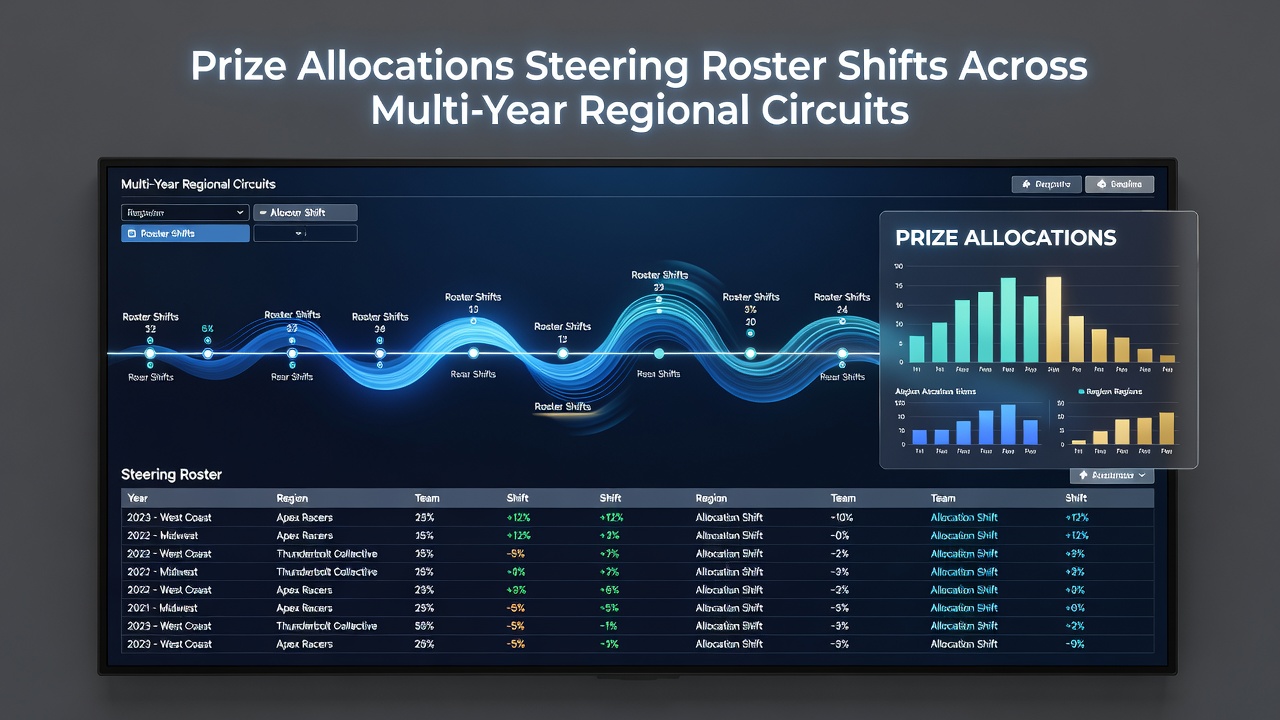 Prize allocations in multi-year regional circuits determine how resources flow to participating teams and athletes, which in turn shapes decisions about roster construction and adjustments over successive seasons. Organizers distribute funds based on performance metrics collected across annual events, and these distributions create incentives that influence whether squads retain core members or pursue new talent. Data from circuit administrators shows that higher prize tiers often correlate with increased spending on player contracts during the off-season periods that follow major payout announcements. Regional circuits operate on schedules that span three to five years, allowing cumulative prize effects to build across repeated competitions. Teams track payout patterns from prior cycles to forecast available budgets, and this forecasting guides recruitment strategies that extend beyond single seasons. When a circuit revises its allocation formula, roster movements tend to accelerate in the following year as groups realign their compositions to match the new reward structure.
Allocation Formulas and Their Influence on Team Planning
Circuit operators apply formulas that weight prize shares according to final standings, head-to-head results, and participation consistency. These formulas feed directly into team budgeting processes because the resulting figures set the ceiling for salary offers and development investments. Observers note that circuits publishing detailed payout breakdowns in advance allow squads more time to model different roster scenarios before registration deadlines arrive.
Adjustments to prize tiers also ripple through lower divisions when top-level payouts change. A shift that increases rewards for mid-table finishes can prompt teams in those positions to hold onto developing players rather than releasing them to higher circuits. Records maintained by league offices indicate that such adjustments have produced measurable changes in retention rates tracked over consecutive campaign years.
Patterns Observed Across Successive Seasons
Longitudinal records reveal that prize concentration at the upper end of standings tends to stabilize rosters among leading teams while increasing turnover among those finishing outside payout positions. Teams outside the top bracket often release players after seasons with reduced allocations, whereas squads receiving consistent top-tier funds demonstrate lower rates of roster flux. June 2026 distribution reports from several circuits documented this pattern continuing across four-year tracking windows.
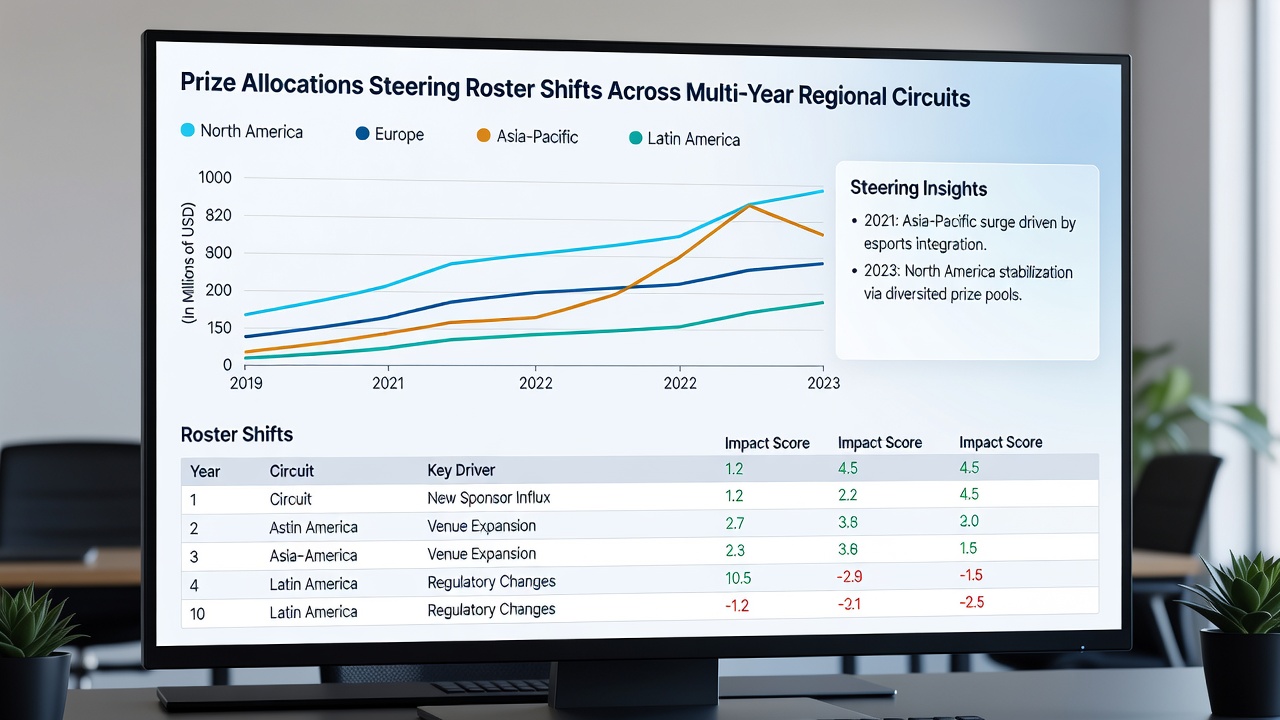
Coaches and managers consult historical payout data when projecting roster costs for upcoming cycles. This practice allows them to anticipate funding gaps that might require trading experienced members for younger athletes who carry lower salary demands. Research compiled by the Australian Sports Commission illustrates how such projections have guided roster composition decisions in comparable multi-year frameworks.
External Factors Interacting with Prize Structures
Sponsorship inflows and venue revenue sometimes supplement official prize pools, yet the core allocation model remains the primary reference point for roster budgeting. When external funding fluctuates, teams fall back on the predictable prize tiers published by circuit organizers to anchor their planning. This reliance creates a feedback loop in which announced allocations shape not only immediate signings but also long-term development pipelines spanning multiple seasons.
Regulatory frameworks in various regions require transparency in how prizes are calculated and disbursed, which adds another layer of predictability that teams factor into roster strategies. Canadian Sport Policy documentation outlines reporting standards that have helped standardize these disclosures across participating organizations.
Conclusion
Multi-year regional circuits continue to demonstrate that prize allocation models serve as structural drivers behind roster continuity and change. Teams that monitor distribution trends across seasons position themselves to make informed adjustments that align with available funding. As circuits refine their formulas and reporting practices, the connection between payout structures and roster decisions remains a central feature of competitive planning in these extended regional frameworks.