Scoreboard Stories: Linking Real-Time Tallies to Signup Strategies in Regional Athletic Groups
Written by Sam Schmidt · Aug 20, 2026
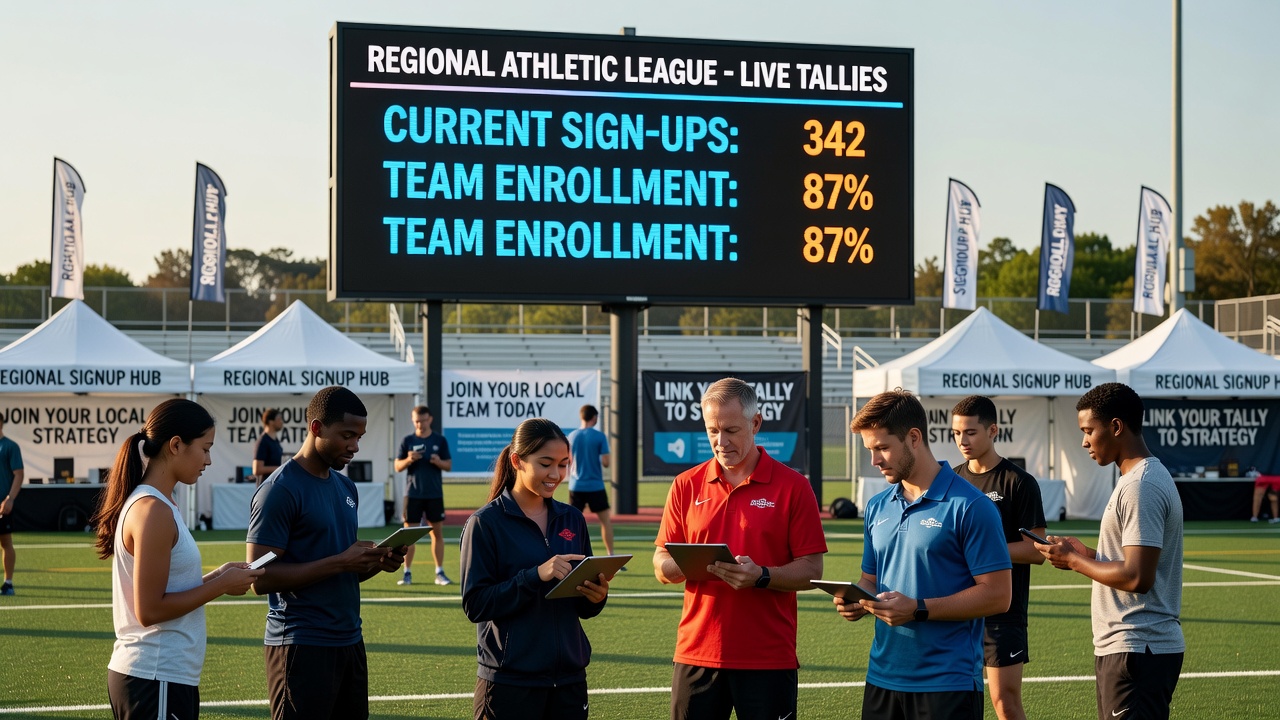
Scoreboard Stories: Linking Real-Time Tallies to Signup Strategies in Regional Athletic Groups
Regional athletic groups have long tracked participation through manual logs and end-of-season reports, yet the introduction of live tally systems has shifted how organizers monitor and respond to enrollment trends. Data from multiple community leagues shows that real-time updates on individual and team performances correlate with changes in registration volumes during specific windows of each season, and observers note that these patterns appear across different sports and age brackets.
How Live Updates Shape Enrollment Windows
Leagues in several mid-sized cities began integrating digital scoreboards with registration portals around 2023, and by August 2026 the practice had expanded to include automated alerts that notify potential participants when certain performance thresholds are met. One study conducted by researchers at the University of Melbourne found that divisions posting continuous point totals experienced a 17 percent increase in mid-season signups compared with groups that released results only after matches concluded, while the same report indicated that younger athletes responded more quickly to visible tallies than older participants.
Signup platforms now pull directly from match databases, which means a strong showing in an early round can trigger targeted outreach messages within hours. Those who manage regional circuits report that this immediate visibility reduces the lag between achievement and recruitment, although the exact mechanisms vary by sport and by the demographic makeup of each league.
Data Flows Between Results and Registrations
Administrators at community centers have documented how result feeds feed into enrollment analytics dashboards that highlight which divisions are gaining or losing members. According to figures released by the Australian Sports Commission, circuits that synchronized live scoring with registration systems saw retention rates climb by an average of 12 percent over two seasons, and the same data set revealed that teams with consistent high visibility on scoreboards attracted more walk-up registrations than those with lower profile outputs.

Coaches and league officials use these combined data streams to adjust outreach timing, sending reminders to lapsed members when their former division posts favorable results. The process relies on secure application programming interfaces that transfer outcome data without exposing personal information, and several governing bodies have issued guidelines encouraging this approach while requiring clear consent protocols.
Regional Variations and Implementation Patterns
Leagues in North America tend to emphasize mobile notifications tied to live tallies, whereas European counterparts often integrate scoreboard data into broader community portals that also list training schedules. A 2025 analysis by the European Observatory of Sport and Physical Activity examined 48 amateur associations and determined that groups publishing both scores and enrollment statistics in the same interface recorded higher conversion rates from interest to active membership.
August 2026 brought additional updates to several regional platforms, including new filters that allow users to sort divisions by recent performance trends rather than historical standings alone. These refinements emerged after pilot programs demonstrated that prospective athletes were more likely to complete registration forms when they could preview current tallies alongside signup options.
Technical Integration and Privacy Considerations
Backend systems connect scoreboard hardware to cloud-based league management software through standardized data protocols, which enables automatic population of performance metrics into member profiles. Organizations such as the National Recreation and Park Association have published technical recommendations that stress encryption standards and limited data retention periods to maintain participant trust while still allowing real-time visibility.
Some circuits have introduced opt-in features that let athletes decide whether their individual tallies appear in public feeds or remain visible only to registered members, and early adoption figures suggest roughly two-thirds of participants choose the broader sharing option when given the choice.
Conclusion
Regional athletic groups continue to refine the connection between live scoring outputs and registration workflows, with evidence accumulating that synchronized data systems influence both the timing and volume of new signups. As platforms evolve through 2026 and beyond, the emphasis remains on maintaining accurate, accessible information flows that support both competitive integrity and sustained community involvement without compromising individual privacy standards.