Waves of Participation: How Signup Patterns Forecast League Dynamics and Outcome Distributions in Regional Events
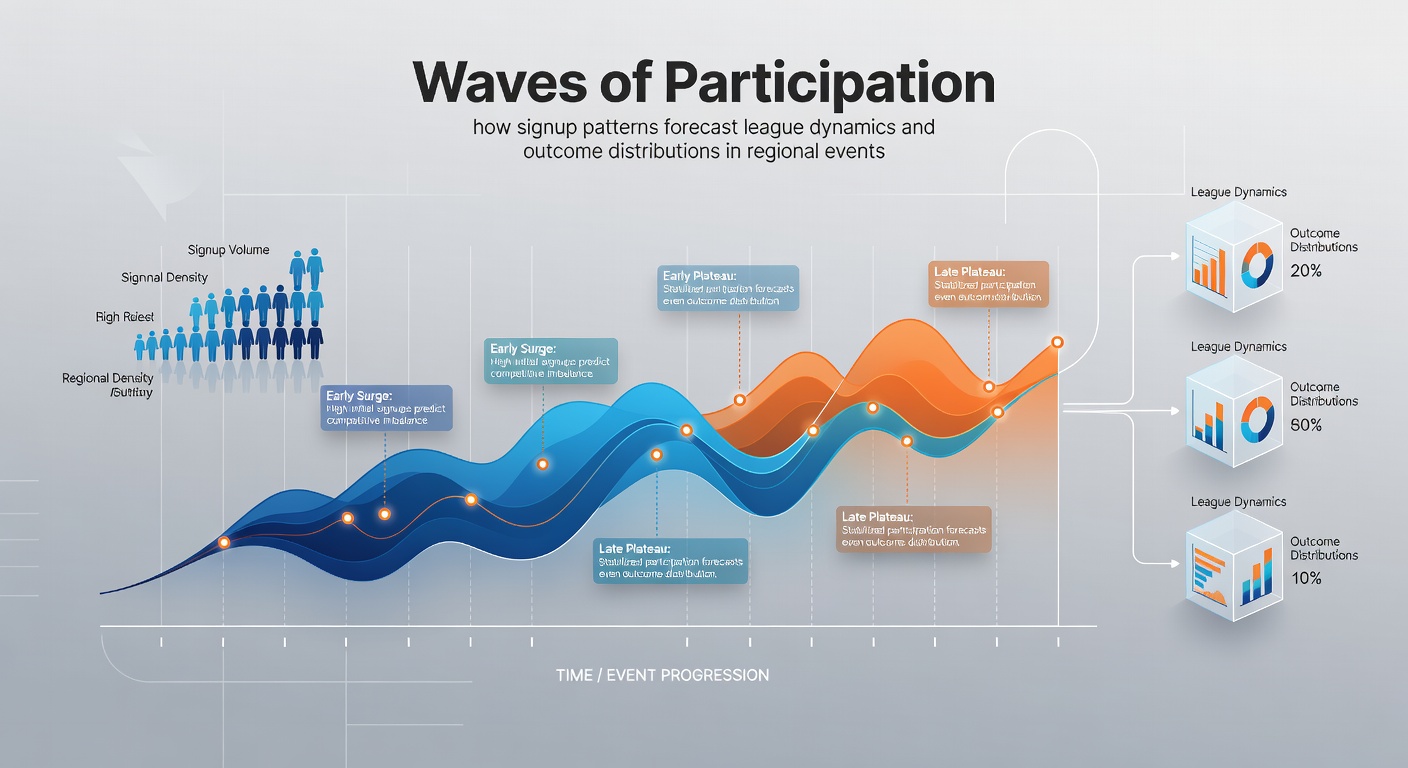 Regional events across various sports and competitive formats rely on registration data to shape everything from bracket construction to resource allocation, and observers note that distinct waves of signups often emerge well before the first matches begin. Early adopters typically fill initial slots within the first week of openings while later waves build momentum closer to deadlines, creating patterns that analysts track through historical records and real-time dashboards. These sequences provide measurable indicators of how fields will balance out once competition starts, according to data compiled by regional sports bodies. Researchers at the Australian Institute of Sport have examined registration timelines in community-level tournaments and found that concentrated early signups correlate with tighter outcome distributions in subsequent rounds. When a large portion of participants registers promptly, the resulting pools tend to feature more even skill spreads because organizers gain time to seed matches effectively. In contrast, events that see delayed surges often end up with clustered talent levels that produce uneven results once play commences.
Tracking Signup Waves in Practice
League administrators monitor these patterns through integrated platforms that log timestamps for each entry, allowing them to identify surges or plateaus that signal broader trends. One study conducted across North American amateur divisions revealed that events opening registration in January frequently experience a primary wave in the first ten days followed by a secondary push near the cutoff, and this rhythm directly influences how many byes or preliminary matches get scheduled. Data shows that predictable waves help forecast the number of competitive matches per participant, reducing idle time and improving overall engagement metrics.
What's interesting is how these timelines interact with external factors such as weather forecasts or overlapping local festivals, which can shift the timing of later waves without altering total participation numbers. Organizers in European regional circuits have documented similar behaviors, where mid-period lulls give way to final-hour rushes that compress preparation windows and affect seeding accuracy. Figures from these sources indicate that late waves often introduce higher variance in player experience levels, leading to wider spreads in match outcomes during early elimination stages.
Forecasting League Dynamics Through Patterns
Signup sequences do more than fill rosters; they allow predictive models to estimate competitive intensity and potential upset rates before any games occur. When early waves dominate, models built on prior seasons suggest stronger mid-tier contenders will advance further because the field stabilizes quickly, enabling targeted practice and strategy adjustments. Later surges, however, introduce unknowns that redistribute expected results, as new entrants may include under-the-radar talents who disrupt projected hierarchies.
Evidence from Canadian provincial leagues demonstrates that tracking cumulative signup curves over multiple years produces reliable forecasts for divisional realignments. In one series of events held during spring cycles, analysts used wave data to anticipate a 15 percent increase in three-set matches when late registrations exceeded 30 percent of the total field. Such projections help governing bodies allocate officials and venues more precisely, avoiding bottlenecks that arise when outcome distributions skew toward prolonged contests.
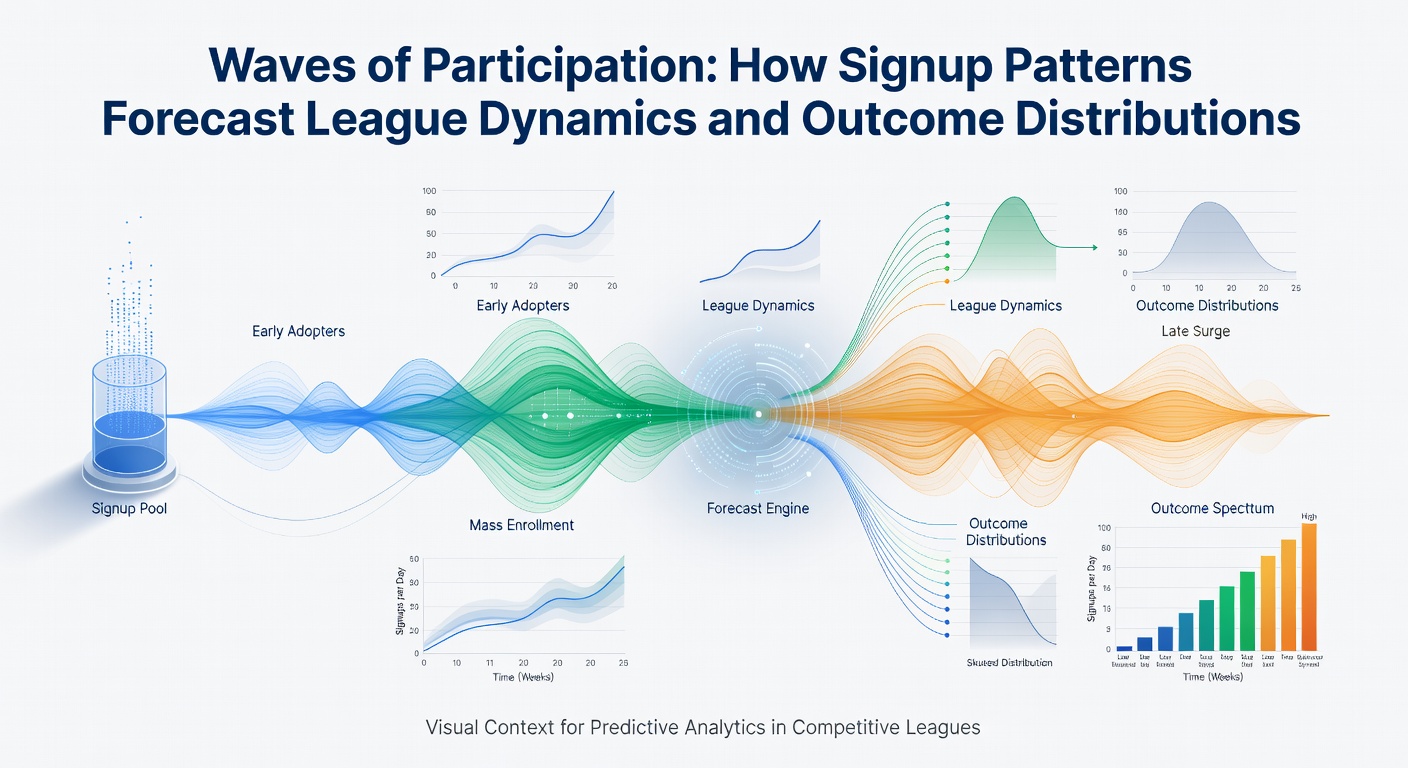
Outcome Distributions and Regional Variations
Regional differences further refine how signup patterns translate into results. Events in densely populated areas often see steadier early inflows due to established networks of clubs and schools, while rural or emerging regions experience more pronounced late waves tied to word-of-mouth promotion. According to reports from the European Sports Confederation, these geographic distinctions produce measurable shifts in bracket predictability, with urban tournaments showing narrower victory margins on average because balanced fields form earlier.
Observers tracking May 2026 regional calendars note that several circuits have adjusted opening dates to capture stronger initial waves, aiming to stabilize participant pools ahead of peak summer travel periods. Historical comparisons indicate that such timing tweaks reduce the frequency of walkovers and forfeited matches, which in turn compresses the tail ends of outcome distributions. Teams and individual competitors benefit from earlier clarity on match schedules, allowing focused preparation that narrows performance gaps across rounds.
Industry reports from research institutions in Asia-Pacific regions highlight additional variables, including digital platform adoption rates that accelerate or delay waves depending on user familiarity. When registration systems integrate reminders and progress trackers, secondary waves tend to arrive sooner and carry more consistent participant profiles. This consistency feeds directly into league-wide metrics such as average points per match and advancement rates, providing organizers with actionable benchmarks for future planning.
Conclusion
Signup patterns serve as leading indicators that shape both the structural and competitive elements of regional events, from initial seeding decisions to final standings calculations. By examining wave timing and volume through established data sources, administrators gain tools to anticipate dynamics and adjust resources accordingly. Continued monitoring across diverse regions ensures these forecasts remain accurate as participation habits evolve alongside technological and scheduling changes.