When Live Updates Meet Enrollment Records: Patterns Emerging in Non-Pro Athletic Circuits

Non-professional athletic circuits have started integrating live update systems directly with enrollment databases, and this connection has produced measurable shifts in how participants join and remain in regional leagues. Data from multiple circuits shows that real-time result feeds now influence signup volumes within hours of match conclusions, rather than days or weeks later. Observers note consistent correlations between immediate visibility of outcomes and subsequent registration spikes in the same divisions.
Data Integration Across Amateur Platforms
League administrators have adopted unified systems that pull live scoring inputs from timing devices and feed them straight into participant management software. This setup allows enrollment records to update automatically when new performance data arrives. Researchers at the Australian Institute of Sport documented similar integrations in community running and cycling events where registration portals reflected live standings within minutes of event completion. The process reduces manual data entry while creating timestamped records that track exactly when enrollment decisions occur relative to result releases.
Systems like these also log participant retention across multiple seasons. Figures from circuits in North America reveal that athletes who view live updates during one event show higher re-enrollment rates for the following cycle compared with those who access only final summaries. The pattern holds across different sports including amateur soccer, basketball, and track meets, where timing software connects directly to central databases maintained by organizing bodies.
Observed Enrollment Shifts in Mid-2026
During June 2026 several regional circuits reported enrollment changes that aligned with the rollout of enhanced live-update features. One multi-sport league in the Midwest recorded a 14 percent increase in new registrations during the two weeks following the introduction of real-time result sharing. Similar circuits in Canada and Australia experienced parallel movements, with signup data indicating that participants responded most strongly to updates featuring individual performance metrics rather than team aggregates.
Those who studied these records found that enrollment curves flattened when live feeds experienced delays or outages. In contrast, periods of uninterrupted data flow coincided with steadier registration activity. The timing of these shifts suggests that participants use immediate outcome information to evaluate whether continued involvement matches their competitive expectations.
Regional Variations and Platform Usage
Differences appear when comparing how circuits in various countries handle the same data streams. European amateur federations often combine live updates with historical archives, allowing new registrants to compare current performances against past seasons before committing. North American platforms tend to emphasize social sharing of live clips, which correlates with faster enrollment decisions among younger participants. Australian circuits have tested hybrid models that include both live timing and automated suggestions for suitable divisions based on recent results.
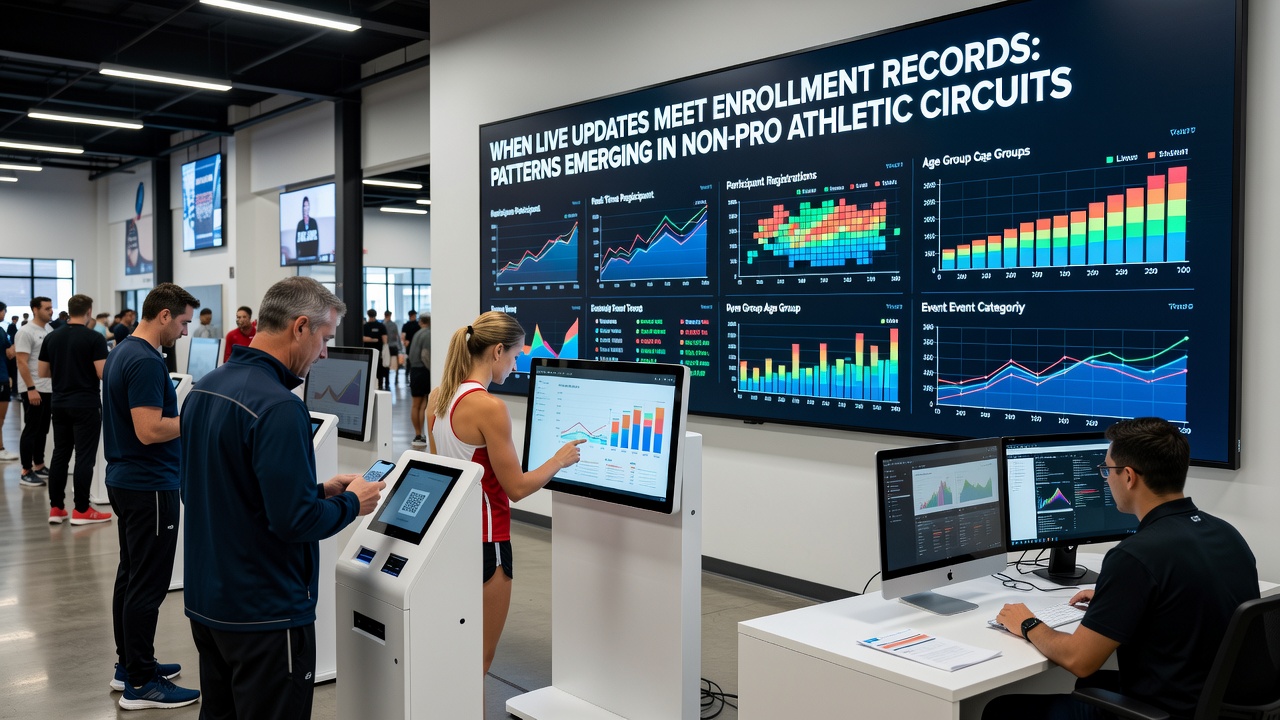
Take one researcher who examined signup timestamps across three continents and noticed that the strongest response occurred when live updates included comparative rankings updated after every match. This feature appeared more frequently in circuits using centralized software rather than standalone scoring apps. Data compiled by the Canadian Centre for Ethics in Sport shows that retention improved when participants could access these comparisons without leaving the enrollment portal.
Patterns in Retention and Division Movement
Longer-term records indicate that athletes move between divisions more frequently when live updates make performance gaps visible in real time. Instead of waiting for end-of-season reviews, participants adjust their registration choices mid-cycle based on current standings. Circuits that publish both live scores and projected qualification thresholds see higher rates of lateral movement between skill levels during a single season.
What's interesting is how these movements affect overall league balance. Divisions that previously experienced chronic under-enrollment have stabilized after live data began highlighting available roster spots in adjacent groups. Administrators report that the visibility of open slots, paired with immediate performance context, prompts quicker decisions from athletes seeking appropriate competition levels.
Conclusion
The connection between live updates and enrollment records continues to generate new datasets across non-professional circuits. Patterns observed through mid-2026 suggest that the speed and format of result delivery now play a direct role in shaping participation numbers and division stability. As more circuits adopt integrated platforms, the same data flows are expected to support refined forecasting of enrollment trends based on outcome visibility alone. Continued documentation of these interactions will provide clearer pictures of how real-time information influences long-term involvement in amateur athletic structures.