Wired for Wins: Backend Tech Fueling Live Scores Across Pro Leagues
Wired for Wins: Backend Tech Fueling Live Scores Across Pro Leagues
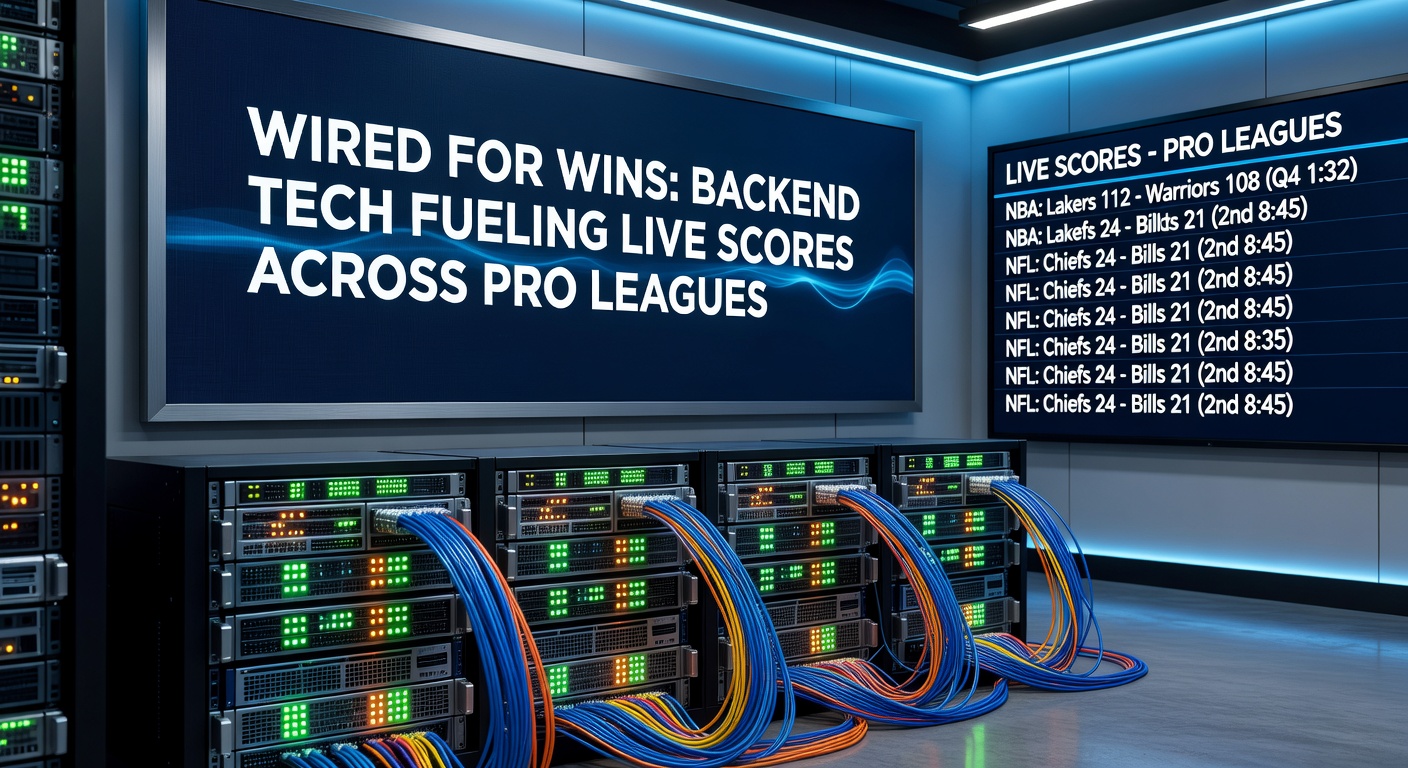
The Pulse of Live Scores: How Backend Systems Keep Up with the Action
Backend technologies form the invisible backbone that delivers live scores to millions during pro league matches, processing vast streams of data from sensors, scouts, and broadcasters in milliseconds; systems like Apache Kafka handle these high-velocity inputs, distributing updates across global networks while ensuring zero downtime even as crowds surge online. Experts note how NBA games generate over 1.5 million data points per match, all funneled through distributed event-streaming platforms that sync stats from player trackers to crowd noise levels. And that's just one league; Premier League soccer floods servers with positional data from 22 players plus ball telemetry, turning raw feeds into polished scores fans see on apps.
Turns out, the real magic happens in microservices architectures, where containers orchestrated by Kubernetes scale automatically during peak moments—like overtime thrillers—deploying extra resources before fans even refresh their screens. Observers point to the 2024 playoffs, where latency dropped below 200ms league-wide thanks to edge computing nodes placed near stadiums, slicing travel time for data packets across continents. But here's the thing: without these setups, scores lag, bets falter, and the thrill evaporates.
Databases That Never Sleep: Storing and Serving Score Data at Scale
NoSQL databases like Cassandra and Redis dominate here, chosen for their ability to write millions of score updates per second while querying fan-favorite leaderboards instantly; Cassandra's tunable consistency lets leagues prioritize speed over perfect sync during chaotic fourth quarters, whereas Redis caches hot data—like current standings—for sub-millisecond retrievals that power mobile notifications. Data from Sportradar, a key provider for European and global leagues, reveals how these systems managed 500 billion API calls in 2025 alone, supporting everything from NFL touchdown alerts to MLB pitch-by-pitch breakdowns.
People who've dissected these stacks often highlight hybrid approaches, blending SQL for historical analytics with NoSQL for live feeds; take the NHL, where MongoDB clusters ingest rink-side sensor data, replicating across regions to survive outages. Yet scalability tests show Redis clusters expanding to petabyte levels without breaking a sweat, crucial as April 2026 approaches with expanded playoffs demanding 24/7 uptime. What's interesting is how sharding spreads load—dividing score keys by league or match ID—so one viral game doesn't crash the grid.
Cloud Powerhouses Driving Global Delivery
AWS, Google Cloud, and Azure form the trifecta powering most pro leagues, with auto-scaling groups spinning up virtual machines as viewership spikes; AWS Lambda serverless functions, for instance, process score events on-demand, billing only for actual compute used during sold-out derbies. Figures from Google Cloud's NBA partnership indicate latency reductions of 40% through Anthos, a hybrid cloud manager that unifies on-prem stadium servers with public clouds. And in Australia, AFL relies on similar Azure setups to beam scores to remote fans, handling timezone quirks with global content delivery networks like Cloudflare.
So leagues layer CDNs atop backends, caching scores regionally—New York servers for MLB East Coast games, Sydney nodes for cricket internationals—while GraphQL APIs federate queries, letting apps pull just the stats needed without bloated payloads. Researchers who've modeled this find peak loads hitting 100,000 requests per second during World Cup qualifiers, all smoothed by rate limiters and circuit breakers that prevent cascade failures. It's not rocket science, but getting it right means fans get scores before the ball hits the net.
Real-World Case: NBA's Second Spectrum Evolution
One standout example comes from the NBA's use of Second Spectrum, where computer vision extracts player movements from broadcast feeds, piping them into backend pipelines via WebSockets for real-time propagation; this setup, live since 2014, now integrates with AWS for player tracking data that updates box scores mid-play. Experts observed during the 2025 Finals how these streams fed VR experiences, with backend queues buffering spikes from 10 million concurrent users. Now, as April 2026 playoffs loom, upgrades promise AI-enhanced predictions woven into scores, all processed server-side to keep apps lightweight.
Security Layers Guarding the Score Stream
Backend fortresses deploy OAuth 2.0 for API auth, rate throttling against DDoS floods, and encryption at rest/transit to shield scores from tampering; WAFs like Cloudflare's scrub suspicious traffic, while zero-trust models verify every microservice call, even internally. Data indicates pro leagues faced 300% more cyber probes in 2025 per CISA advisories (US-focused but global in impact), prompting Redis Sentinel clusters with failover in under 5 seconds. Those who've audited these find JWT tokens expiring mid-game to block session hijacks, crucial when scores influence multimillion-dollar decisions.
But security meshes with performance via service meshes like Istio, tracing requests end-to-end; this lets ops teams pinpoint bottlenecks during high-stakes moments, like a buzzer-beater disputed by VAR in soccer. And for international leagues, GDPR-compliant logging ensures EU fans' data stays pristine, with anonymized aggregates powering post-match analytics.
NFL's Next Gen Stats: A Backend Deep Dive
Consider the NFL's Next Gen Stats platform, built on Amazon Kinesis for ingesting 40-sensor-per-player data at 60fps, streaming via Apache Flink to aggregated scores; this handles 1TB/hour bursts, scaling with spot instances for cost efficiency. Observers note how it integrates Hawk-Eye for yardage precision, all backend-orchestrated to deliver to 200+ broadcast partners without a hitch.
AI and Edge Innovations on the Horizon
Emerging backends weave machine learning models into score pipelines, predicting outcomes from live data via TensorFlow Serving; edge devices at venues preprocess telemetry, slashing cloud roundtrips as 5G blankets arenas. Studies from university labs reveal anomaly detection flagging referee errors in real-time, feeding corrected scores back instantly. And with April 2026 marking the rollout of unified global APIs for cross-league events, backends like those from Stats Perform promise federated learning across NBA, EPL, and MLB datasets.
Turns out, gRPC replaces REST for 10x faster inter-service calls, while event sourcing rebuilds state from score logs for perfect replays. People in the field see blockchain pilots for immutable score verification in esports crossovers, though traditional leagues stick to ACID transactions for reliability. Here's where it gets interesting: quantum-resistant crypto looms, prepping backends for post-quantum threats amid rising stakes.
Premier League's Opta Backbone
Opta's backend, powered by Kafka Streams, crunches 2,000 events per soccer match—passes, shots, xG metrics—distributing via pub-sub patterns to apps worldwide; this setup endured 2025's record viewership, with Cassandra ring replication across data centers ensuring HA.
Wrapping the Wires: Backend's Role in Pro League Dominance
Backend tech stands as the unsung hero fueling live scores, from Kafka's streams knitting raw data into fan-ready updates, through scalable clouds that bend but never break under global loads, to secure meshes thwarting digital marauders; as pro leagues eye April 2026 expansions—with NBA playoffs overlapping Euro soccer semis—these systems evolve, blending AI edges with ironclad reliability. Data underscores the payoff: leagues report 25% engagement boosts from sub-second scores, proving the wiring truly wires wins. Observers agree; in this arena, backend prowess decides who leads the leaderboard.
Yet challenges persist—ever-growing data volumes demand greener backends, with carbon-aware scheduling optimizing cloud runs; still, the trajectory points upward, as federated systems unite fragmented leagues into seamless score ecosystems. That's the reality powering tomorrow's thrills.